

Heidi Duncan Murray
Coach • Actor • Director • Teacher • Artist • Creative Mentor
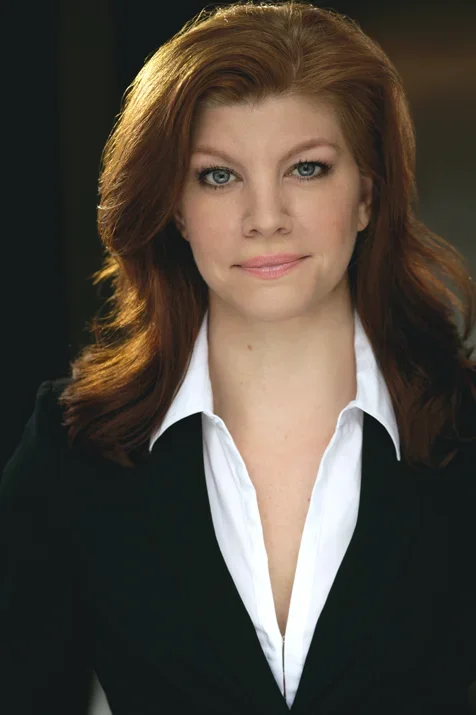
For more than 30 years, Heidi Duncan Murray has been teaching, making art, and helping actors and artists discover and bring out the deeper, unique art inside them.
Her creative life has never fit neatly into a single category. Over the years, Heidi has worked as an actor, director, producer, writer, teacher, costumer, ceramic artist, musician and painter.
These disciplines are not separate worlds. They are different ways of learning how to see, listen, respond, imagine, and express herself, connect with community, tell the truth and make good art.
A Life in the Arts
As an actor, Heidi has worked across television, film, and the stage. Her screen credits include appearances on The History Channel, A&E, and The Discovery Channel, along with leading roles in independent films. Her theater work has ranged from comedy to classical and experimental performance on stages in Boston & New York. She has directed and produced a number of plays, written full length scripts, and worked as a costume designer and constructor.
Heidi’s writing and poetry poured into songwriting and music from an early age. She studied classical guitar and the fiddle, songwriting and interpretation.
Beyond performance, Heidi is a practicing visual artist. She works in oils and ceramics, continuing the same exploration of observation, imagination, form, and human experience that lies at the heart of her theatrical work. Her first solo New York gallery show exhibiting her paintings was held at 38|39 Gallery.
Thirty Years of Teaching
Teaching has been one of the great through-lines of Heidi's life.
For three decades, she has taught students and coached artists across three continents, working with people from different cultures, disciplines, and stages of artistic development. She holds a BA in English Language and Literature and Theatre Arts and a Master's degree in Spiritual Formation and Direction.
Her professional theater training includes extensive study of the Meisner Technique with Matthew Corozine and Lyralen Kaye, auditioning, on-camera technique, the business of acting. She has also trained in stage combat and improvisation.
But technique is only part of what she teaches.
Heidi is interested in what happens when an artist becomes fully present—when the need to perform, impress, or get it "right" begins to fall away and something more truthful can emerge.
The Artist's Gym
This is the heart of Duncan Murray Studios.
Heidi has created the studio as a kind of creative gym: a place where actors and artists can build strength, flexibility, courage, imagination, and creative freedom.
The studio is rooted in the Meisner Technique, with its emphasis on truthful response, presence, listening, and living fully in the moment. But the work extends beyond acting. Musicians, painters, dancers, writers, and artists of every medium can benefit from developing the same fundamental creative muscles.
The goal isn't simply to become a better actor.
It is to become a vibrant, enlivened artist.
*A Note from Heidi:
I'm crazily curious and love working with my hands. When I finally found the permission to call myself an artist, I discovered that that blew open the door to finding my passion, owning my health, framing how I see the world, bringing me rest and excitement, and allowing me to walk in the world as myself.
This is why I teach and coach and mentor other artists as well as actors. I love creatives, I love their sensitivity, I love how they see themselves and the world around them. So many of them struggle with what that sensitivity has cost them. If I can be part of helping them find their true identity, coach their way through blocks to their art, and get to watch them bloom, even as artists who have been practicing their art for decades, that is pure joy to me.
Art, Formation & the Creative Soul
Heidi's work as an actor and teacher is deeply informed by her background in spiritual formation. She is a spiritual director, and her Master's work in Spiritual Formation and Direction has given her another language for understanding the inner life of the artist.
She sees creativity as something that involves the whole person.
Sometimes an artist doesn't need more information. They need permission to experiment. Sometimes they need discipline. Sometimes they need to get out of their own way and fearlessly recognize the truth around them and within them. Sometimes they need a place where they can fail, play, listen, begin again, and discover something they didn't know was there.
Heidi's work is to create that kind of space—one that is both rigorous and compassionate, disciplined and playful, grounded and imaginative.
For Heidi, teaching isn't about creative artists who look like her.
It's about helping artists discover their own voice.
And perhaps, in the process, helping them heal some of the places where that voice became quiet.